Description
Daniel Riley – AI Video Bootcamp Review: Is It Worth Your Investment?
Generative artificial intelligence has disrupted traditional video production at unprecedented speeds. Tools that once required massive post-production suites, specialized render farms, and extensive visual effects teams are now accessible through simple text prompts and intuitive web interfaces. Amid this rapid evolution, creators and marketers are searching for structured, high-yield educational programs to help them stay competitive.
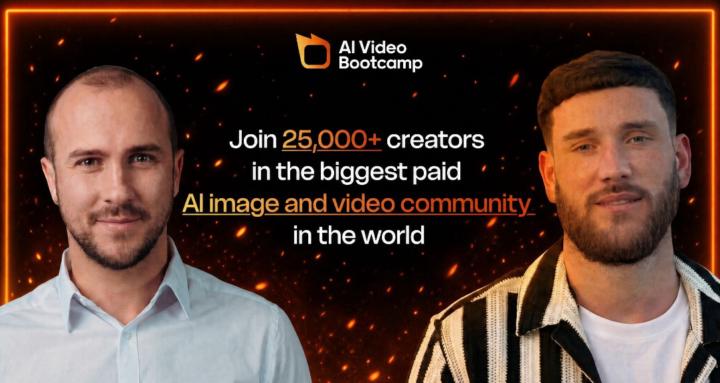
Among the most discussed offerings in this niche is the Daniel Riley – AI Video Bootcamp. Designed for filmmakers, agency owners, digital marketers, and content creators, this program promises to bridge the gap between basic tool experimentation and professional-grade generative video production.
This comprehensive review dives deep into the course structure, module content, toolstack coverage, value proposition, pros, cons, and who stands to gain the most from enrolling.
What Is the AI Video Bootcamp?
The program is a specialized, hands-on training framework built to teach students how to leverage bleeding-edge generative AI models for video generation, cinematic storytelling, and visual effects. Rather than focusing solely on static image generation or theoretical AI concepts, this bootcamp centers specifically on dynamic motion, scene consistency, prompt structure for video, and hybrid post-production workflows.
Instructor Daniel Riley brings a practitioner’s perspective to the curriculum. Instead of treating AI as a gimmick, the course positions these tools as force multipliers for professional production—allowing solo creators or small teams to execute high-budget visual ideas in a fraction of the traditional timeframe.
Core Curriculum Breakdown
The program is structured logically, guiding students from fundamental principles of generative art to advanced, multi-tool video pipelines.
Module 1: Foundations of Generative Visuals
Before generating moving images, creators must understand spatial composition, lighting, and style framing.
-
Prompt Architecture: How to write structured prompts for image generators like Midjourney and Stable Diffusion to establish keyframes.
-
Style Consistency: Techniques for maintaining subject identity, color palettes, and cinematic lighting across multiple generation iterations.
-
Camera Mechanics in AI: Translating traditional cinematography parameters—such as focal length, depth of field, and shutter speed—into text inputs.
Module 2: Text-to-Video and Image-to-Video Workflows
The core of the bootcamp explores turning static keyframes into fluid, temporal video sequences.
-
Control and Motion Vectors: Utilizing platform-specific motion controls to govern camera movement (pan, tilt, zoom, orbit) and subject movement.
-
Image-to-Video Mechanics: Why starting with an image prompt yields vastly superior temporal stability compared to pure text-to-video generation.
-
Managing Artefacts: Identifying, minimizing, and fixing common generative glitching, warping, and morphing errors.
Module3: Advanced Control and Custom Models
For creators looking to move beyond simple web-app presets, this section covers fine-grained generation techniques.
-
ControlNet and Motion Brushes: Directing specific regions of an image to move while keeping background elements locked.
-
Character Consistency: Methods for training or prompting identical characters across vastly different environments and narrative arcs.
-
Video-to-Video Transformation: Stylizing existing live-action footage using AI models without losing the underlying performance or choreography.
Module 4: Audio Synchronization, Lip-Sync, and Editing
A video is only as convincing as its sound design. This module shifts focus toward complete audiovisual integration.
-
Voice Synthesis and Cloning: Utilizing tools like ElevenLabs to create realistic voiceovers and dialogue sequences.
-
AI Lip-Syncing: Matching audio tracks to generated avatar mouth movements for natural presentation.
-
Assembly and Upscaling: Combining assets inside traditional non-linear editors (NLEs) like Premiere Pro or DaVinci Resolve, followed by AI-driven 4K upscaling.
Tools Covered in the Program
One of the strongest selling points of the course is its tool-agnostic approach. While software platforms update rapidly, the underlying workflows emphasized throughout the modules remain applicable regardless of which engine is leading the market.
Key Takeaways: What You Will Actually Learn
-
How to Eliminate the “AI Look”: Most amateur AI videos suffer from rubbery motion, inconsistent lighting, and erratic camera movements. The bootcamp places heavy emphasis on cinematic restraint and post-processing techniques that make output look like film rather than software demos.
-
Pipeline Efficiency: Learn how to set up an end-to-end creative workflow that takes a project from narrative script to storyboards, voice tracks, animated shots, and final master render without hitting creative bottlenecks.
-
Commercial Viability: Discover how to pitch AI-assisted production workflows to commercial clients, agency buyers, or corporate teams looking to reduce production overhead without sacrificing quality.
Pros and Cons of the Course
To offer a balanced and honest assessment, let’s examine where the program shines and where it may fall short depending on your existing skill set.
The Advantages (Pros)
-
Actionable and Practical: Minimal filler or abstract theory; lessons focus directly on real-world project creation.
-
High Production Standards: Focuses on cinematic, commercial-grade visual results rather than quick viral gimmicks.
-
Updated Workflows: The lessons address modern tooling, focusing on temporal stability and precise subject control.
-
Time-Saving Pipelines: Saves creators hundreds of hours of trial-and-error by outlining exact parameter settings, seed management, and post-production steps.
The Drawbacks (Cons)
-
Subscription Costs for Tools: To follow along fully, students will need active paid subscriptions to third-party tools (e.g., Midjourney, Runway, ElevenLabs, Topaz), which adds to the initial investment.
-
Fast-Paced Ecosystem: Because generative software updates monthly, minor UI differences may arise between lesson recordings and live software interfaces.
-
Hardware Requirements: Advanced offline workflows (such as ComfyUI or Local Stable Diffusion) require a computer with a dedicated, high-VRAM GPU.
Who Is This Bootcamp Best For?
-
Filmmakers and Visual Effects Artists: Who want to pre-visualize scenes rapidly, build pitch decks, or integrate AI elements into live-action edits.
-
Digital Marketers and Content Creators: Needing high volumes of unique, high-quality visual assets for ad campaigns, social media, and client deliverables.
-
Agencies and Production Houses: Looking to optimize client budgets and deliver high-concept commercial proposals without massive crew overhead.
-
Motion Designers and Animators: Seeking to expand their traditional 2D/3D toolkit with fast AI generation and style-transfer capabilities.
Who Should Skip It?
-
Absolute beginners who do not know basic video editing concepts or timeline management.
-
Hobbyists looking purely for free tools without investing in professional SaaS generation platforms.
-
Anyone expecting a single “magic button” that creates a finished feature film without manual editing, prompt refinement, and post-production effort.
Final Verdict: Is It Worth It?
The generative visual landscape is flooded with low-quality, surface-level YouTube tutorials that quickly become outdated. The Daniel Riley – AI Video Bootcamp distinguishes itself by offering a cohesive, highly practical framework designed around cinematic output and professional workflows.
If you are serious about incorporating generative video into your creative toolbox, client offerings, or media business, this program provides a clear, high-speed shortcut through the noise. It doesn’t just teach you how to click buttons inside an app; it teaches you how to think like an AI director—giving you control over composition, movement, audio, and final assembly.
For creators ready to invest both in their education and the required tool stack, it stands out as a highly effective, commercially relevant training program.


Reviews
There are no reviews yet.